

Forceps are the most numerous instruments on any surgical tray. A basic set can hold a dozen different patterns, and a major set more than thirty. Knowing the types of surgical forceps, their names and what each one is for helps theatre staff prepare the right tray, helps students learn faster, and helps buyers order the patterns surgeons actually use.
This guide groups forceps by job, with pictures of the instruments we manufacture in Sialkot.
Two basic designs: thumb forceps and ring-handled forceps
- Thumb forceps (non-locking): two spring arms joined at one end and held like tweezers, such as tissue and dressing forceps. They grasp and release quickly.
- Ring-handled forceps (locking): scissor-style finger rings with a ratchet that locks the jaws closed, such as hemostats, Allis and Babcock forceps. They hold steadily without the surgeon squeezing.
Quick list: surgical forceps names and uses
| Forceps | Type | Main use |
|---|---|---|
| Adson tissue forceps | Thumb, toothed | Holding skin during suturing |
| DeBakey forceps | Thumb, atraumatic | Vessels and delicate tissue |
| Russian tissue forceps | Thumb, rounded tips | Grasping thicker tissue |
| Dressing forceps | Thumb, serrated | Dressings, gauze, delicate tissue |
| Kelly forceps | Locking hemostat | Clamping medium vessels |
| Mosquito forceps | Locking hemostat | Clamping small vessels |
| Kocher-Ochsner forceps | Locking, toothed | Heavy tissue, fascia |
| Allis forceps | Locking, teeth | Grasping tough tissue |
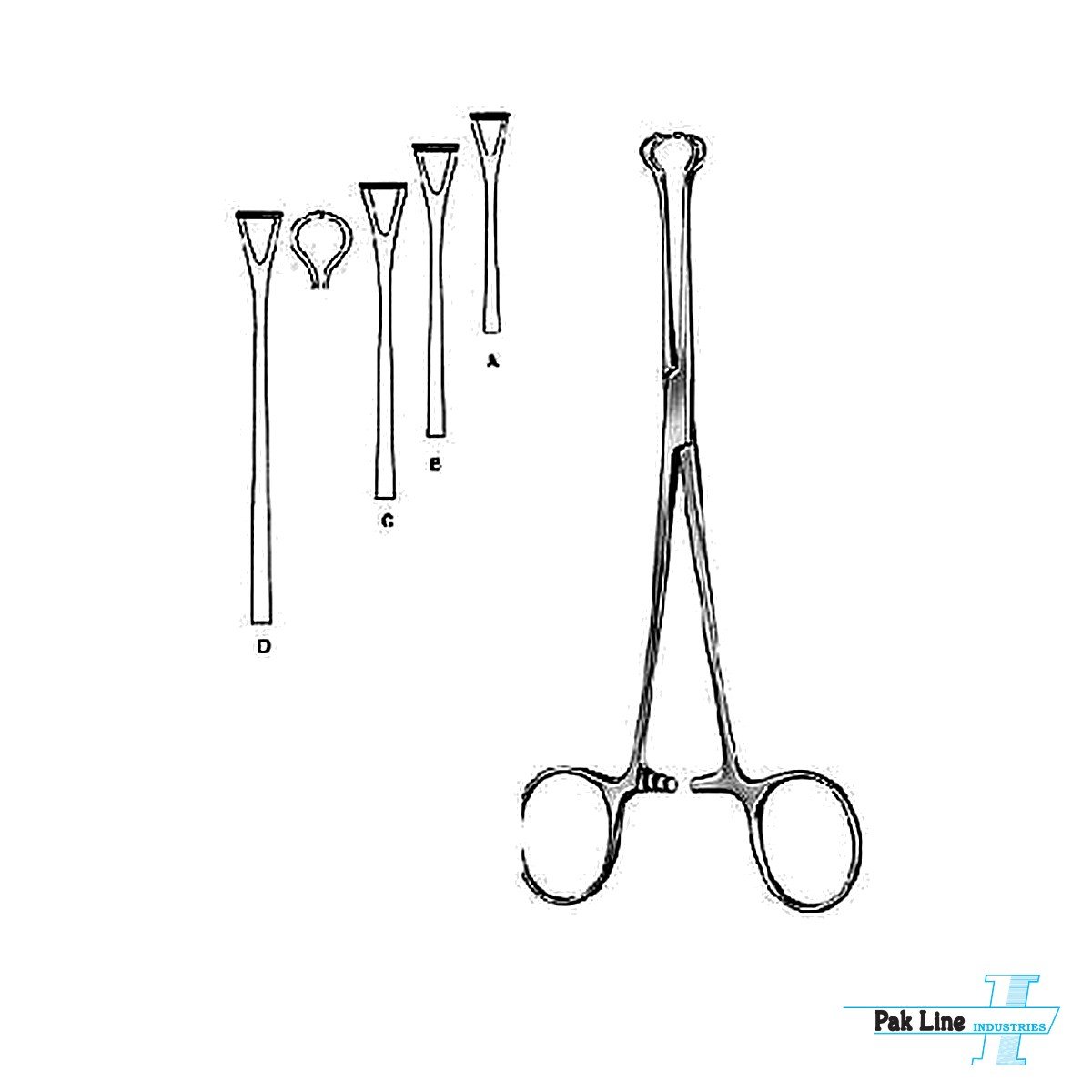
| Babcock forceps | Locking, smooth | Bowel, appendix, tubes |
| Sponge holding forceps | Locking | Skin prep and swabbing |
| Backhaus towel clamp | Locking, sharp | Securing drapes |
| Intestinal clamps | Locking | Occluding bowel |
| Splinter forceps | Thumb, fine | Removing foreign bodies |
| Bipolar forceps | Electrosurgical | Coagulating with current |
1. Tissue forceps
Tissue forceps hold tissue steady while the surgeon cuts or sutures. The tip decides how they treat tissue.

- Adson tissue forceps: broad grip, fine 1×2 toothed tips; the standard forceps for skin closure. See Adson tissue forceps.
- Toothed tissue forceps (rat-tooth): interlocking teeth hold skin and fascia firmly without slipping.
- DeBakey forceps: long, fine atraumatic serrations for vessels and bowel; the standard in cardiovascular surgery. See our CVT instruments.
- Russian tissue forceps: rounded, serrated tips for grasping thicker tissue.
2. Dressing forceps
Dressing forceps have serrated, non-toothed tips. They handle dressings, gauze and packing, and grip delicate tissue with less trauma than toothed forceps.

Toothed or non-toothed? Use toothed forceps on skin and tough tissue, where a firm grip with less pressure causes less crushing. Use non-toothed (dressing) forceps on delicate tissue, vessels and dressings.
3. Hemostatic forceps (hemostats)
Hemostats are locking forceps that clamp blood vessels to stop bleeding. They differ by size and serration.
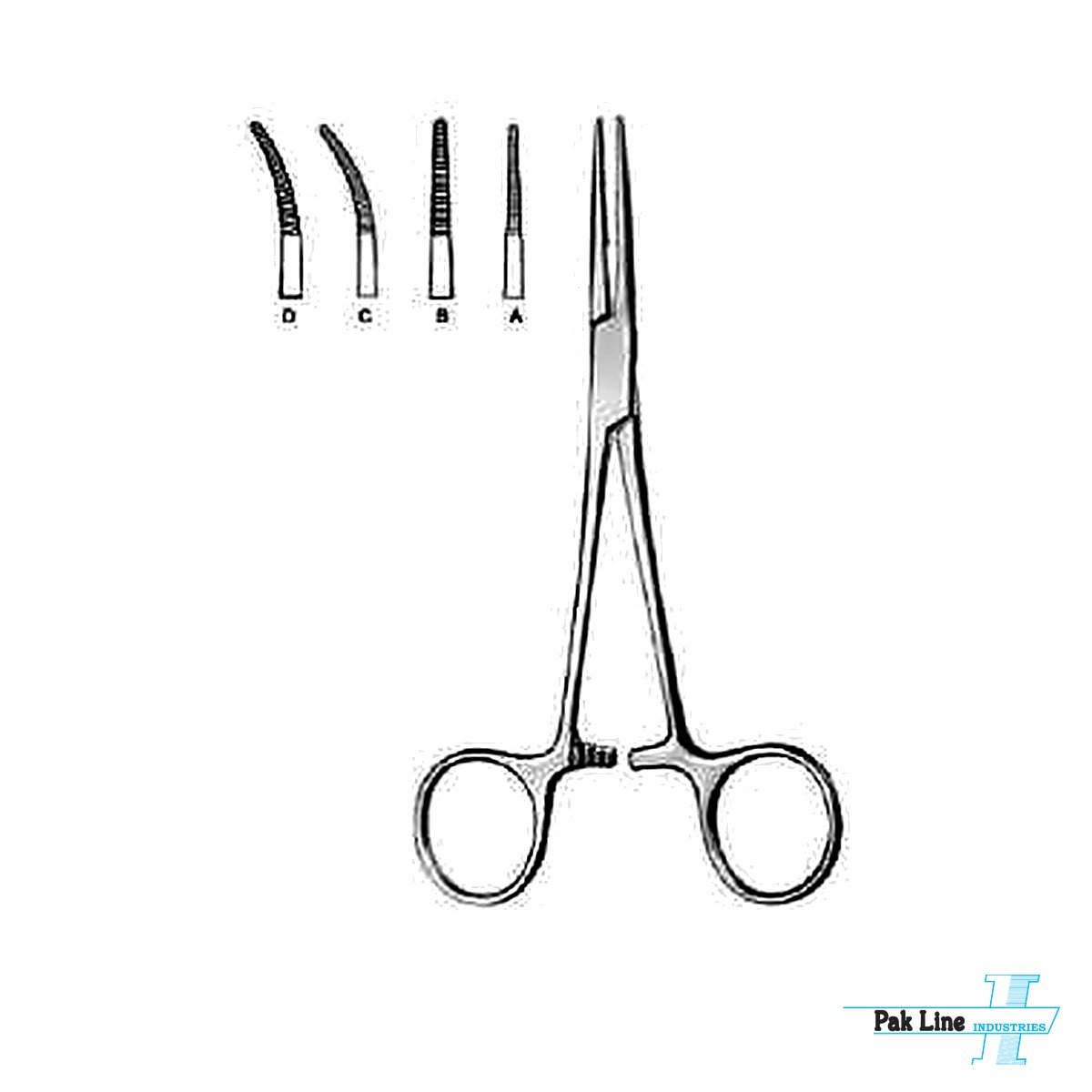
- Mosquito (Halsted): small, fine jaws for small vessels.
- Kelly: medium, serrations on the front half of the jaws.
- Crile: medium, serrations along the full jaw.
- Rochester-Pean: large, fully serrated, for big vessels and tissue bundles.
- Kocher-Ochsner: heavy jaws with 1×2 teeth at the tip for fascia and tough tissue.
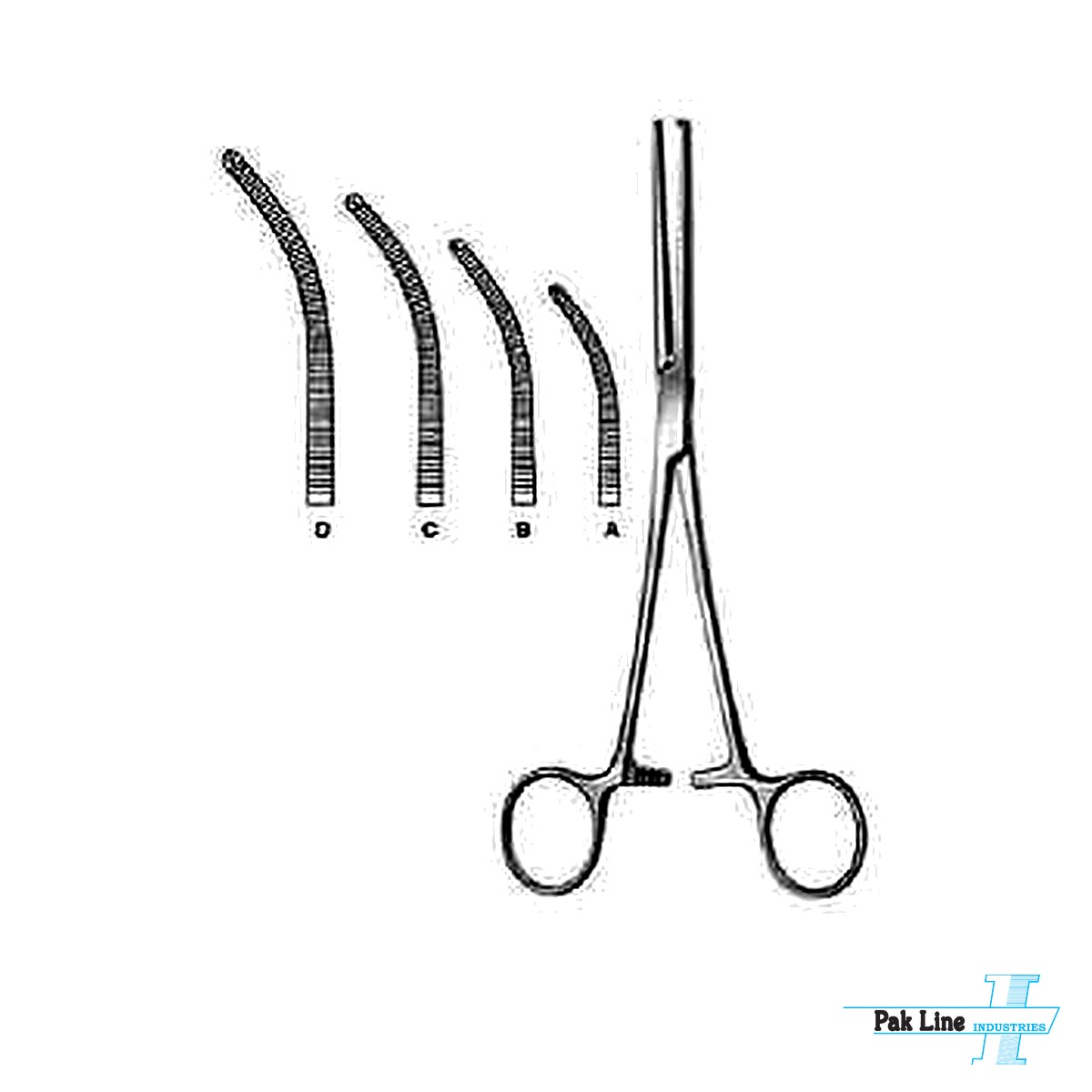
For a full comparison read Kelly, Mosquito, Crile and Kocher forceps explained, or browse our hemostats.
4. Grasping and holding forceps
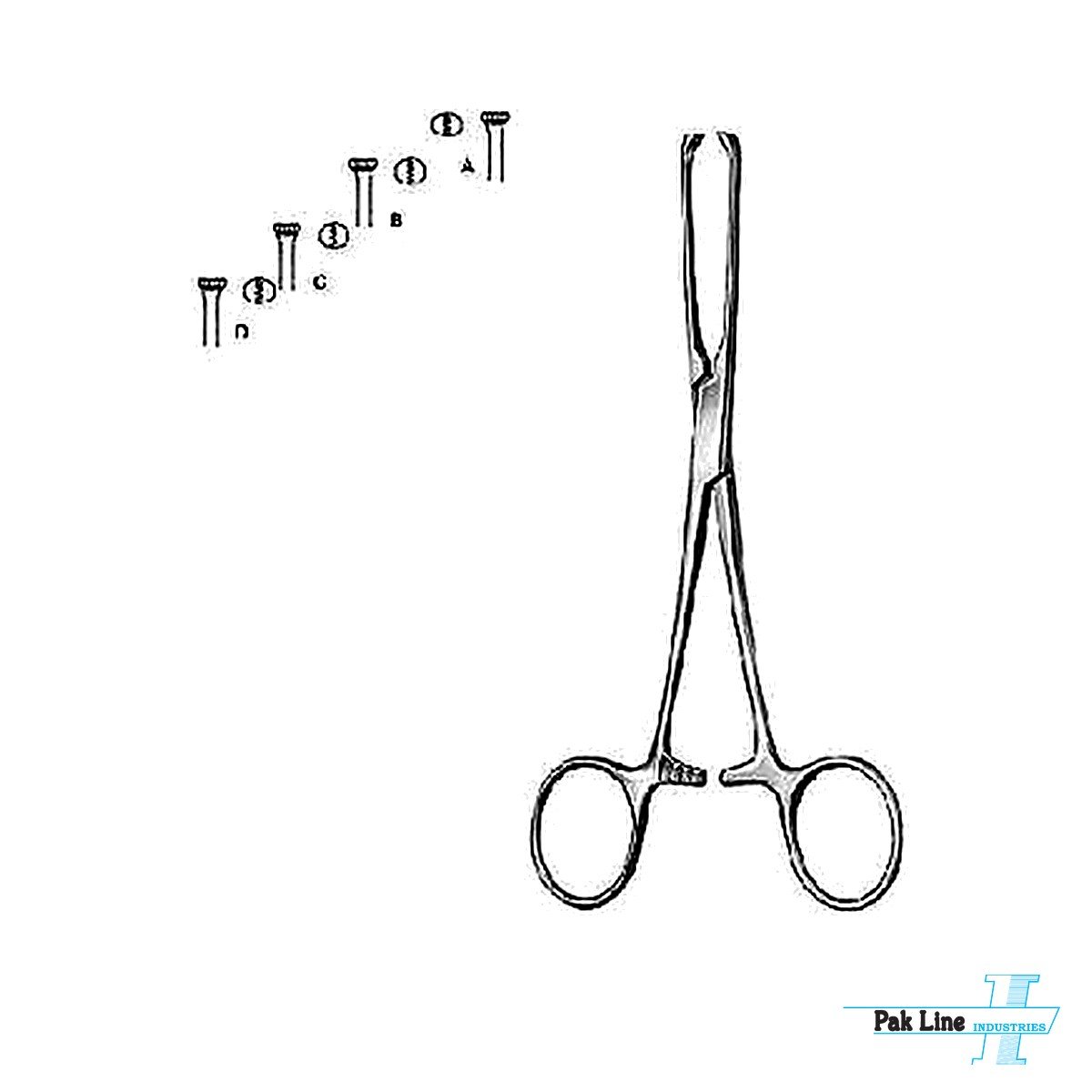
- Allis forceps: small interlocking teeth for a firm hold on tough or slippery tissue such as fascia and bowel edges.
- Babcock forceps: smooth, rounded fenestrated jaws that hold delicate tubular structures (appendix, bowel, fallopian tube) without crushing.
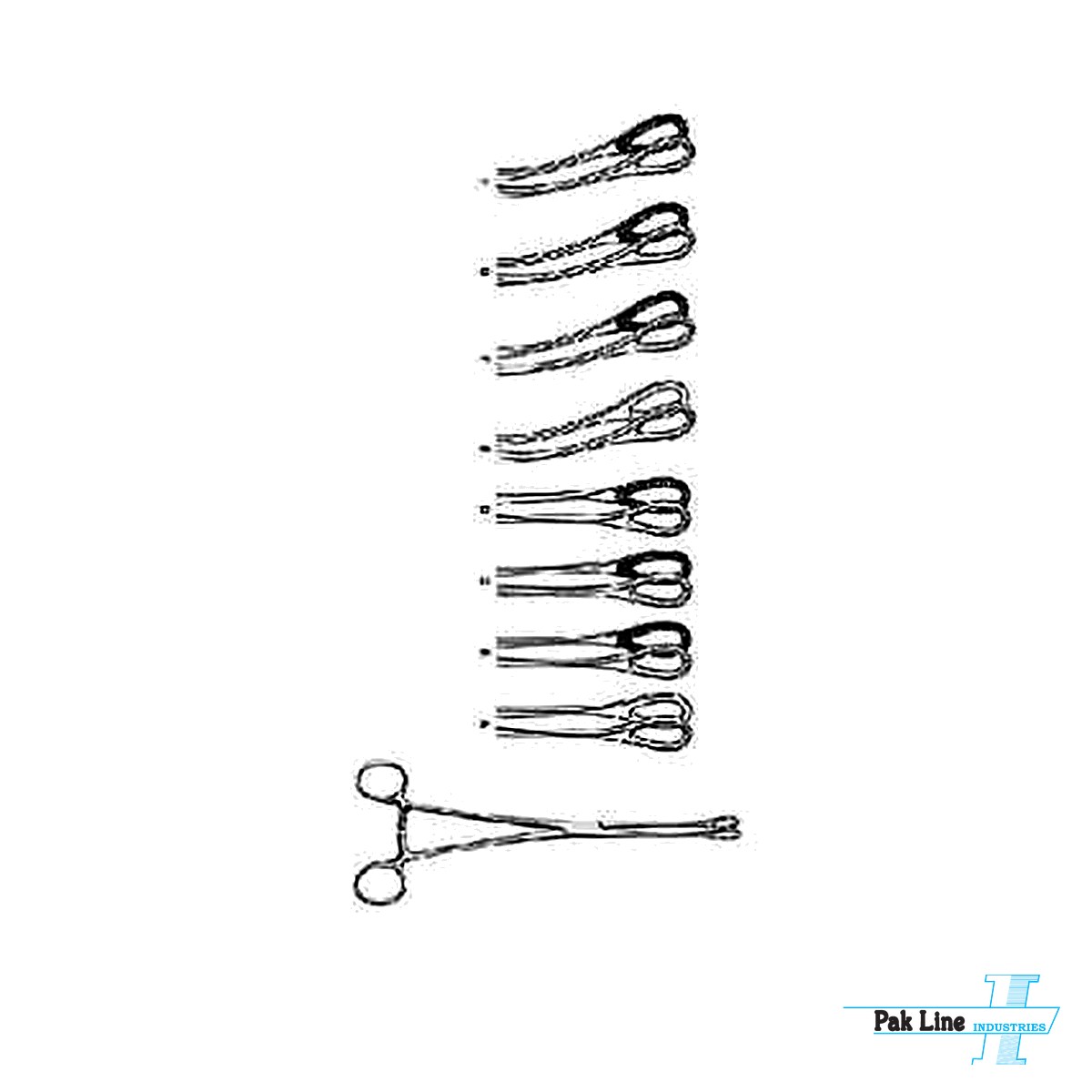
- Sponge holding forceps (Foerster, Rampley): ring-shaped jaws hold swabs for skin preparation and blotting.
5. Towel clamps
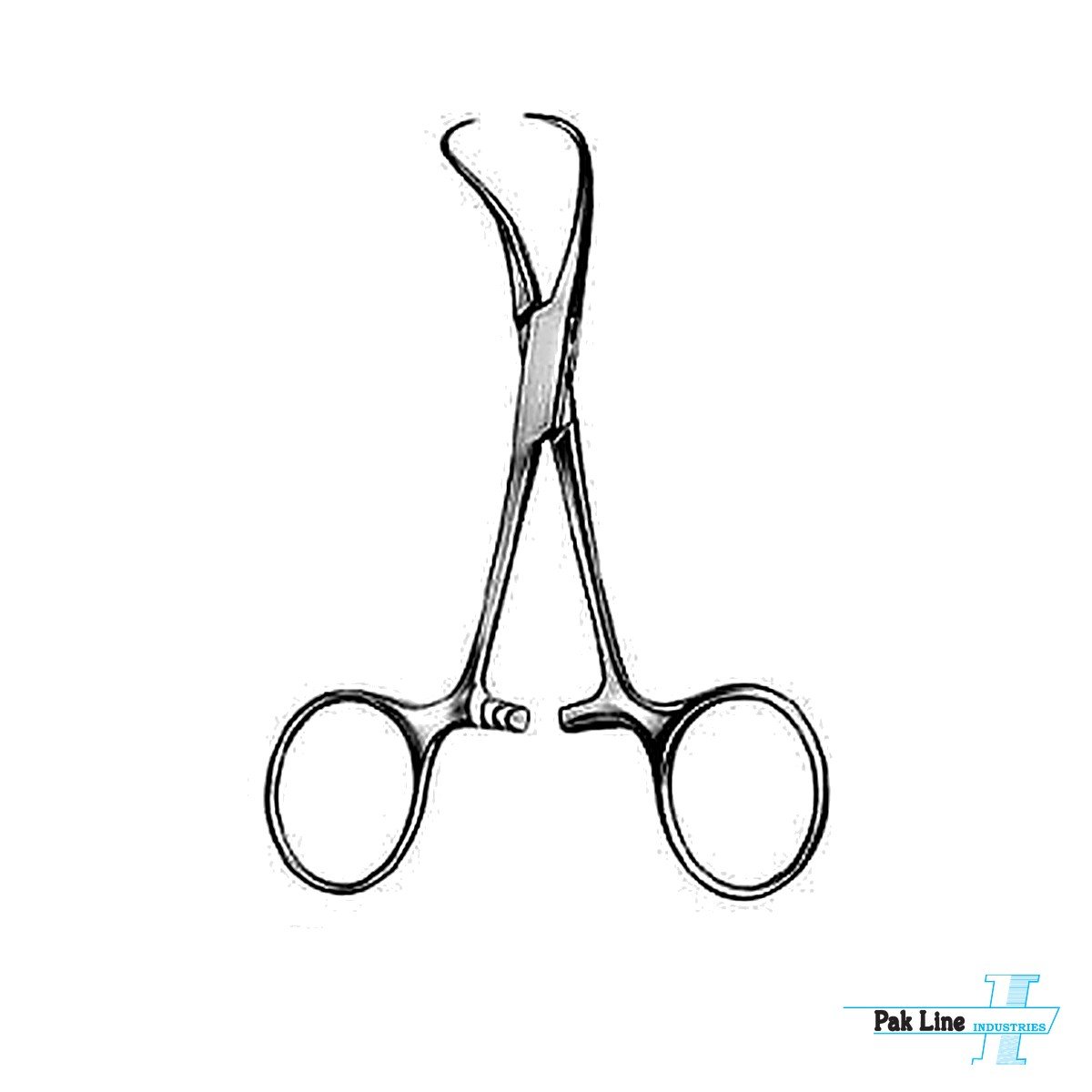
Towel clamps keep drapes in place around the sterile field. The Backhaus towel clamp has sharp, curved tips that pierce and lock the drape; the Lane towel clamp is a heavier pattern. Non-perforating towel clamps protect reusable drapes.
6. Intestinal clamps
Intestinal clamps close off a section of bowel during resection. Doyen clamps have soft, longitudinal serrations to occlude without crushing, while Kocher intestinal clamps crush the segment that will be removed.
7. Specialty forceps
- Splinter forceps: very fine, sharp tips for removing splinters, sutures and foreign bodies.
- Micro forceps: Castroviejo, Bonn and jeweller forceps for ophthalmic, plastic and microsurgery. See ophthalmic instruments.
- Bone holding forceps: Lane, Verbrugge and Ferguson patterns hold bone fragments in orthopaedic surgery. See orthopedic instruments.
- Bipolar forceps: insulated forceps that coagulate tissue with electric current. Read our bipolar forceps guide.
- Dental and oral forceps: extraction forceps are a separate family, covered in our dental extraction forceps guide.
How to choose and check surgical forceps
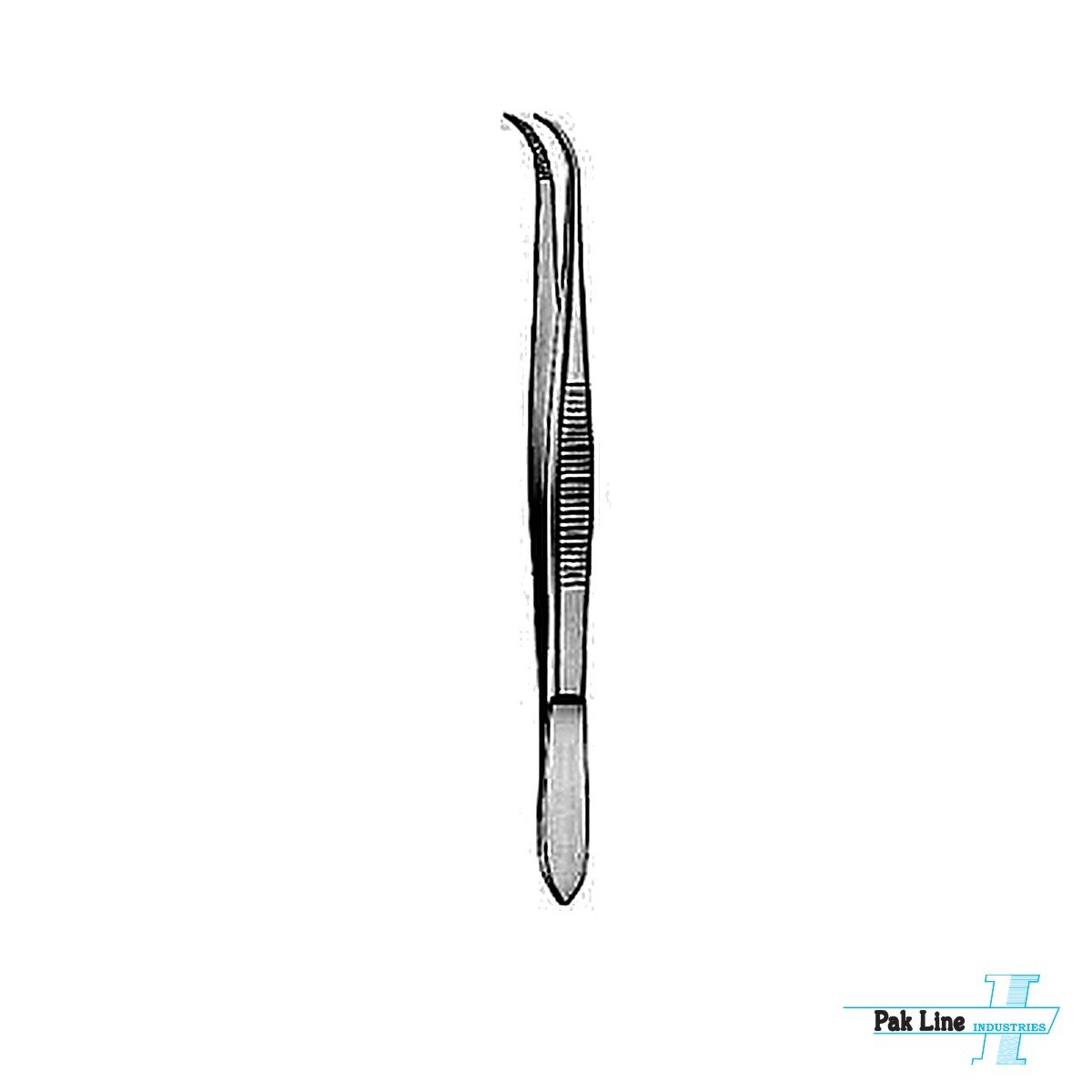
- Tip alignment: tips should meet evenly; teeth should mesh with no overlap.
- Ratchet and box lock: on locking forceps the ratchet must hold at every step and the box lock must have no side play.
- Spring tension: thumb forceps should open fully and evenly every time.
- Length: 12-16 cm for superficial work, 18-25 cm for deep cavities.
- Steel and documents: surgical-grade stainless steel (ISO 7153-1), ISO 13485 and CE documentation.
Our 12-point quality checklist explains each test.
Surgical forceps from Pak Line Industries
Pak Line Industries manufactures every type of forceps in this guide in Sialkot, Pakistan, in standard and tungsten carbide versions, for hospitals and distributors in Europe, the United States, the Middle East and Asia. Browse our surgical forceps, see the full general surgery range, download the catalogue or request samples.
FAQs
What are the main types of surgical forceps?
Tissue forceps, dressing forceps, hemostatic forceps, grasping forceps (Allis, Babcock, sponge holders), towel clamps, intestinal clamps and specialty forceps such as micro, bone holding and bipolar forceps.
What is the difference between toothed and non-toothed forceps?
Toothed forceps grip skin and tough tissue firmly; non-toothed (dressing) forceps are gentler for delicate tissue and dressings.
What are Adson forceps used for?
Adson forceps hold skin edges and fine tissue, especially during suturing and skin closure.
What is the difference between Allis and Babcock forceps?
Allis forceps have teeth for a firm grip on tough tissue; Babcock forceps have smooth, rounded jaws for delicate tubular structures.
What forceps are used to stop bleeding?
Hemostatic forceps such as mosquito, Kelly, Crile and Rochester-Pean clamps.
Related guide: Adson forceps with teeth vs without teeth
Related guide: Non-stick bipolar forceps: materials, coatings and quality checks
Buy surgical forceps direct from the manufacturer
Pak Line Industries has manufactured surgical, dental and beauty instruments in Sialkot, Pakistan since 1985. ISO 13485 & CE quality, OEM and private label, exported to 55 countries.
