


Bipolar forceps are essential electrosurgical instruments used to grasp tissue and coagulate small vessels with precise, controlled energy. They are used in neurosurgery, ENT, plastic, gynecology, ophthalmic and general surgery. For hospitals and distributors, choosing the right types and a reliable manufacturer makes a big difference to performance and safety.
How bipolar forceps work
In bipolar electrosurgery, both the active and return electrodes are the two tips of the forceps. Current flows only through the tissue held between the tips, rather than through the patient’s body as in monopolar surgery. This gives:
- Precise coagulation with minimal lateral thermal spread
- No need for a patient return pad
- Safer use near nerves and delicate structures
- Effective coagulation in wet surgical fields
Main types of bipolar forceps
- Straight bipolar forceps: general purpose coagulation in open surgery.
- Bayonet bipolar forceps: offset handles keep the surgeon’s hand out of the line of sight, popular in neurosurgery and ENT.
- Angled and curved forceps: access deep or awkward areas.
- Micro bipolar forceps: very fine tips for microsurgery and ophthalmic work.
- Irrigating bipolar forceps: deliver saline at the tips to reduce sticking and charring.
- Non-stick bipolar forceps: special tip alloys or coatings reduce tissue adhesion.
- Endoscopic and laparoscopic bipolar forceps: long, slim instruments for minimally invasive surgery.
- Bipolar artery and vessel sealers: heavier forceps with a ratchet for sealing larger vessels in open abdominal, pelvic and thoracic surgery.
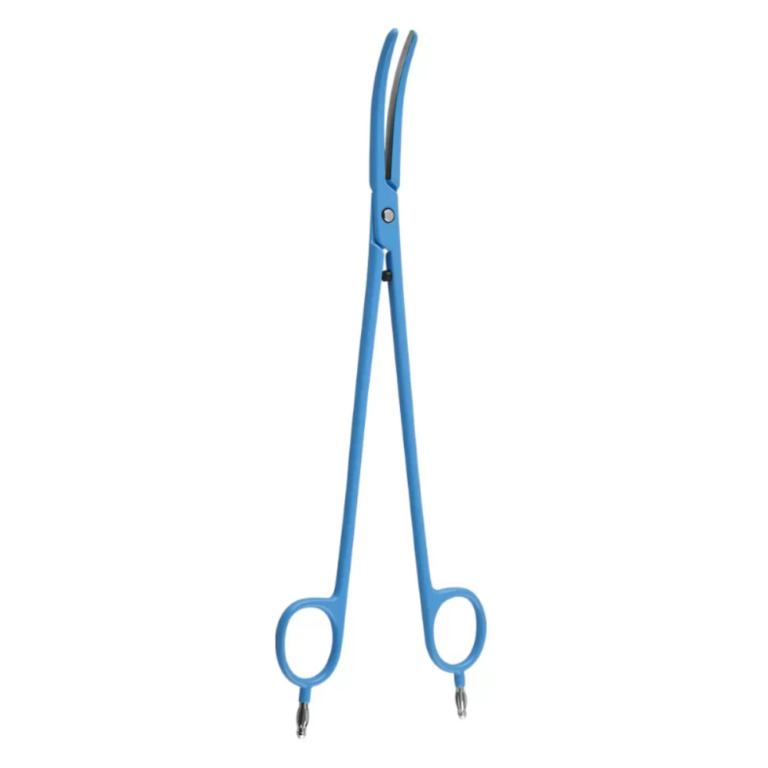
Key specifications to compare
- Length: commonly from about 11 cm for micro work to 26 cm or more for deep fields.
- Tip width: from fine 0.3 to 0.5 mm micro tips to 1 to 2 mm general tips.
- Insulation: high-dielectric coating along the shafts to protect surrounding tissue and the surgeon’s hand.
- Connector: European (flat two-pin) or US (round two-pin) style, to match the generator and cable.
- Reusable vs single-use: reusable stainless steel forceps offer lower cost per procedure in high-volume settings.
Quality checks before buying
- Uniform, intact insulation with no cracks or bubbles
- Perfectly aligned tips that meet evenly when closed
- Good spring tension that is comfortable for long procedures
- Pins firmly fixed and compatible with standard bipolar cables
- Electrical safety testing and documentation
Care and maintenance
Clean tips gently with a soft cloth or tip cleaner, never with abrasive pads that damage the tip surface. Inspect insulation before every use and remove any damaged forceps from service. Follow our cleaning and sterilisation guide.
Bipolar forceps from Pak Line Industries
We manufacture reusable bipolar forceps, endoscopic bipolar forceps and bipolar artery sealers in Sialkot with high-dielectric insulation, made in an ISO 13485:2016 certified facility. Browse our electrosurgical instruments or request a quote for hospital or private label supply.
FAQs
What is the difference between monopolar and bipolar forceps?
In monopolar surgery current passes through the patient to a return pad; with bipolar forceps current flows only between the two tips, giving more precise and localised coagulation.
Are bipolar forceps reusable?
Yes. Stainless steel bipolar forceps are reusable and can be steam sterilised, provided the insulation is inspected regularly.
Source instruments direct from the manufacturer
Pak Line Industries has manufactured surgical, dental and beauty instruments in Sialkot, Pakistan since 1985. ISO 13485 & CE quality, OEM and private label, exported to 55 countries.
