

Orthopaedic surgery is about bone: cutting it, shaping it, holding it and fixing it. That needs instruments far stronger than general surgical tools. This guide lists the main orthopedic instruments by name, explains what each one is used for, and shows the patterns we manufacture in Sialkot.
Orthopedic instruments list: quick reference
| Instrument | Group | Main use |
|---|---|---|
| Bone rongeur | Cutting | Biting away small pieces of bone |
| Bone cutting forceps | Cutting | Cutting ribs and small bones |
| Osteotome | Cutting | Cutting and shaping bone with a mallet |
| Bone chisel | Cutting | Removing bone, one bevel |
| Bone gouge | Cutting | Scooping curved channels of bone |
| Mallet | Cutting | Driving osteotomes, chisels and gouges |
| Gigli saw / amputation saw | Cutting | Sawing through bone |
| Bone curette | Shaping | Scraping bone, removing tissue from cavities |
| Bone file / rasp | Shaping | Smoothing bone edges |
| Periosteal elevator | Exposure | Stripping periosteum from bone |
| Bone lever (Hohmann) | Exposure | Levering and retracting around bone |
| Bone holding forceps | Holding | Holding fractured bone during reduction |
| Wire twisting forceps / wire cutters | Fixation | Tightening and cutting cerclage and K-wires |
1. Bone cutting instruments
These instruments remove or divide bone. They need hardened, precisely ground edges and strong joints.
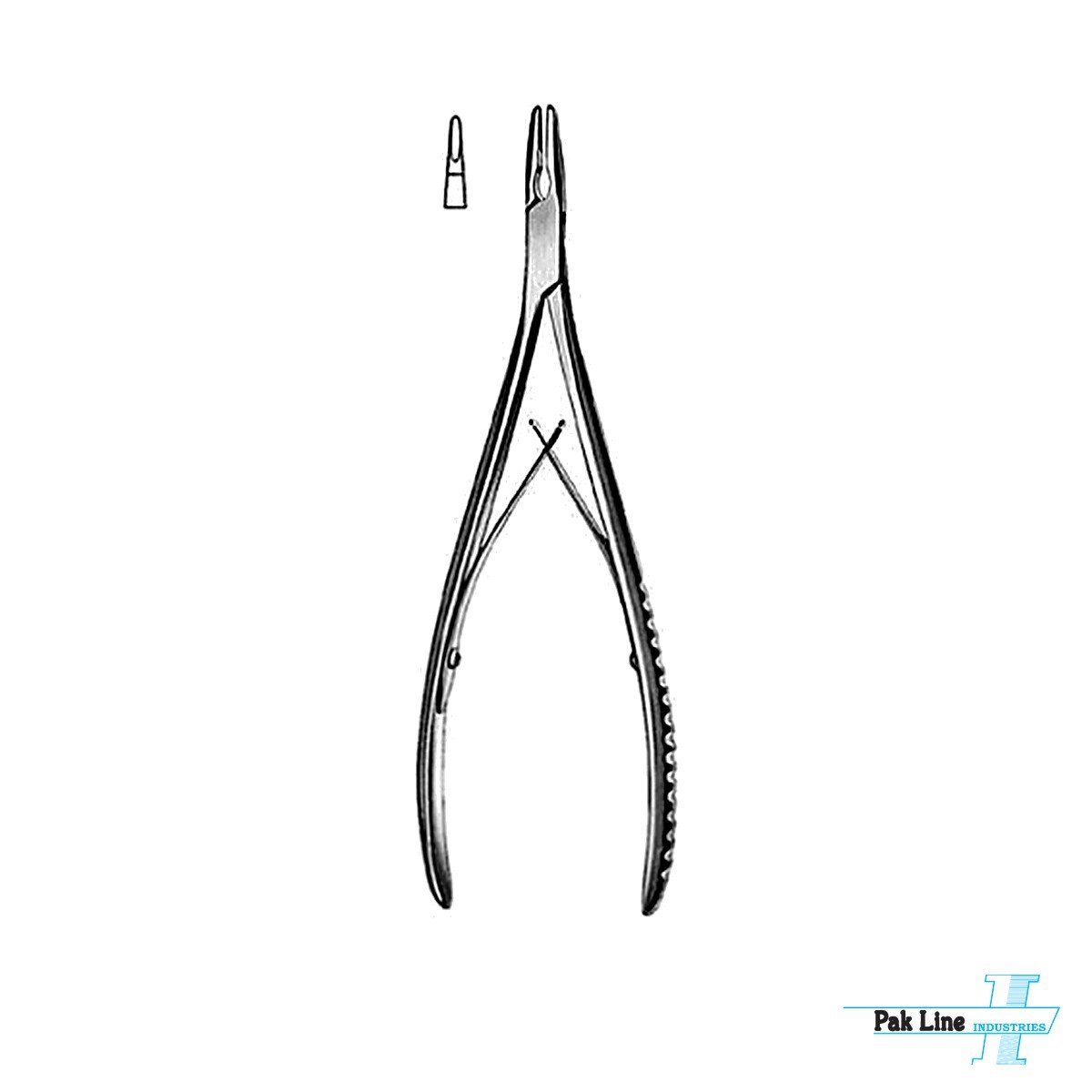
- Bone rongeurs: cupped jaws that bite off small pieces of bone. Single-action (Luer) for light work and double-action (Stille-Luer, Ruskin) for more force with less hand effort.
- Bone cutting forceps: Liston and Stille patterns with sharp, straight or angled blades for ribs and small bones.
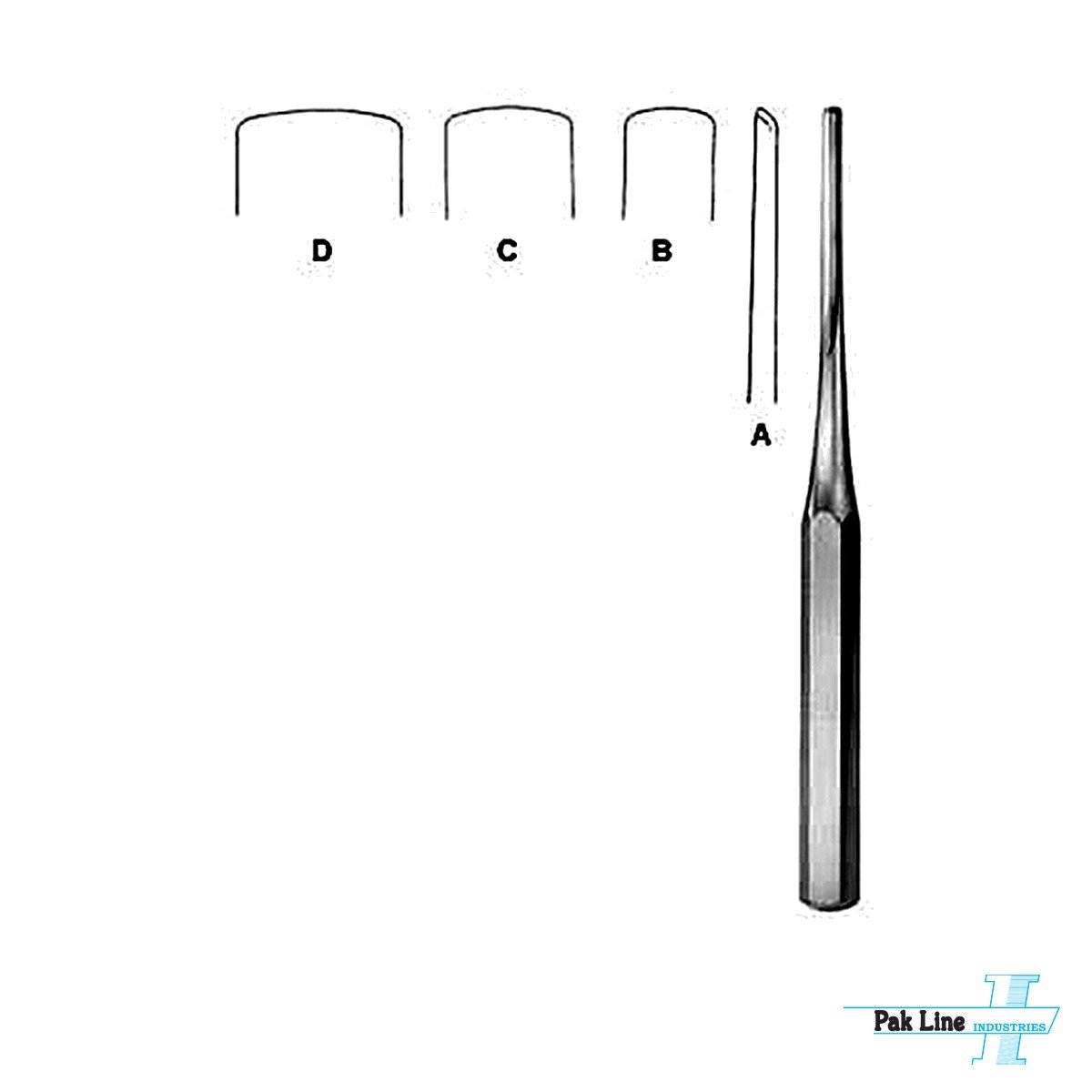
- Osteotomes: flat blades bevelled on both sides, driven with a mallet to cut and shape bone. Hibbs and Lambotte are common patterns.
- Chisels and gouges: a chisel has one bevel for removing bone; a gouge has a curved blade for scooping.
- Mallets: stainless steel or nylon-faced mallets drive cutting instruments.
- Saws: the flexible Gigli wire saw and rigid amputation saws divide bone where power saws are not used.


2. Shaping instruments: curettes and files
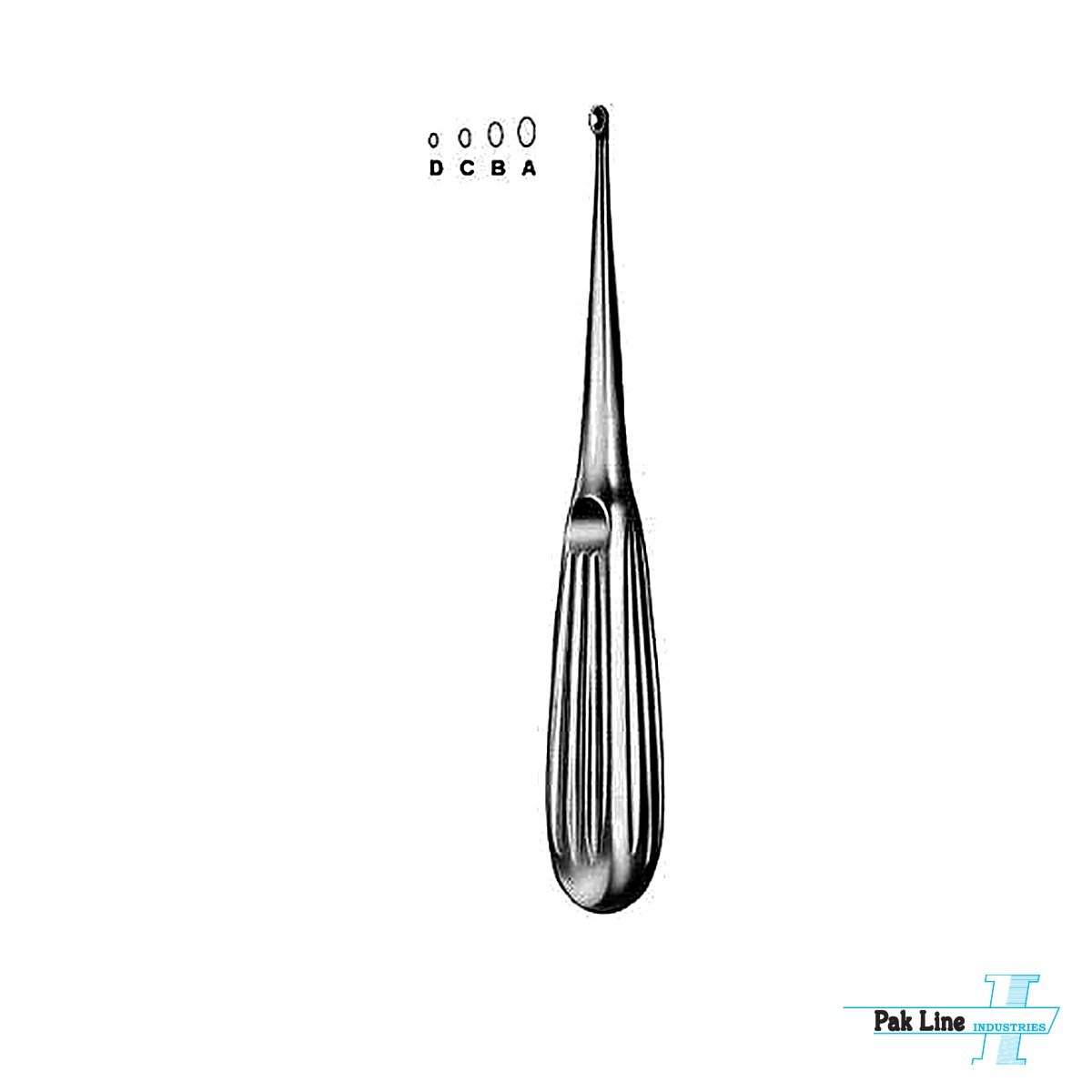
- Bone curettes: sharp spoon-shaped tips (Volkmann, Bruns) scrape bone, remove granulation tissue and clean cavities.
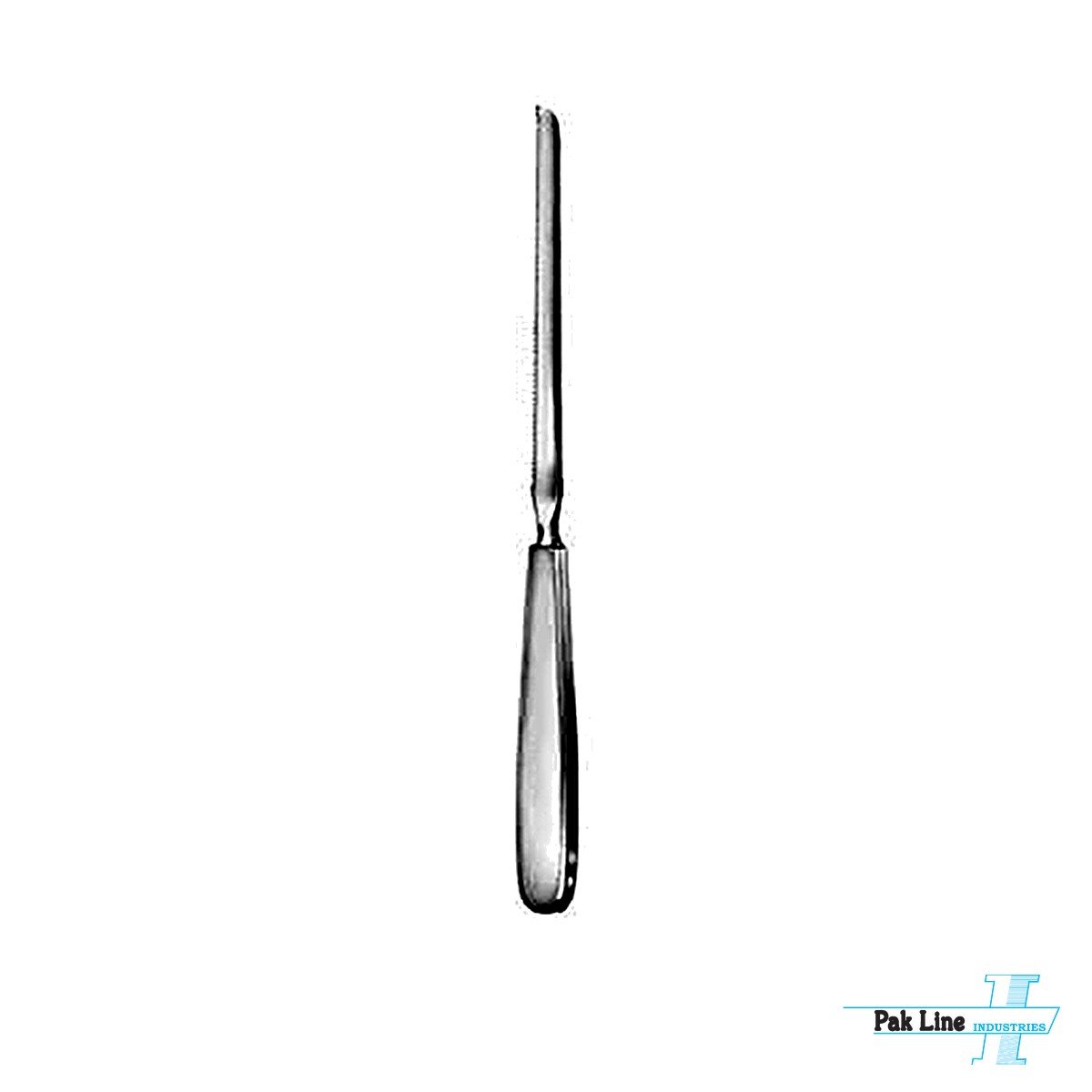
- Bone files and rasps: smooth sharp bone edges after cutting, for example in amputation and hand surgery.
3. Exposure instruments: elevators and levers
- Periosteal elevators: Langenbeck, Farabeuf and Freer elevators strip the periosteum so the surgeon can see and work on bone.
- Bone levers (Hohmann type): placed around bone to lever it into view and retract soft tissue.
- Orthopaedic retractors: self-retaining Weitlaner and Gelpi retractors hold the wound open. See our retractors guide.

4. Holding and fixation instruments
- Bone holding forceps: Lane, Verbrugge and Ferguson forceps grip bone fragments while the fracture is reduced and fixed.
- Reduction forceps: pointed reduction clamps hold fragments in position for plating.
- Wire twisting forceps and wire cutters: tighten cerclage wire and cut K-wires and pins.
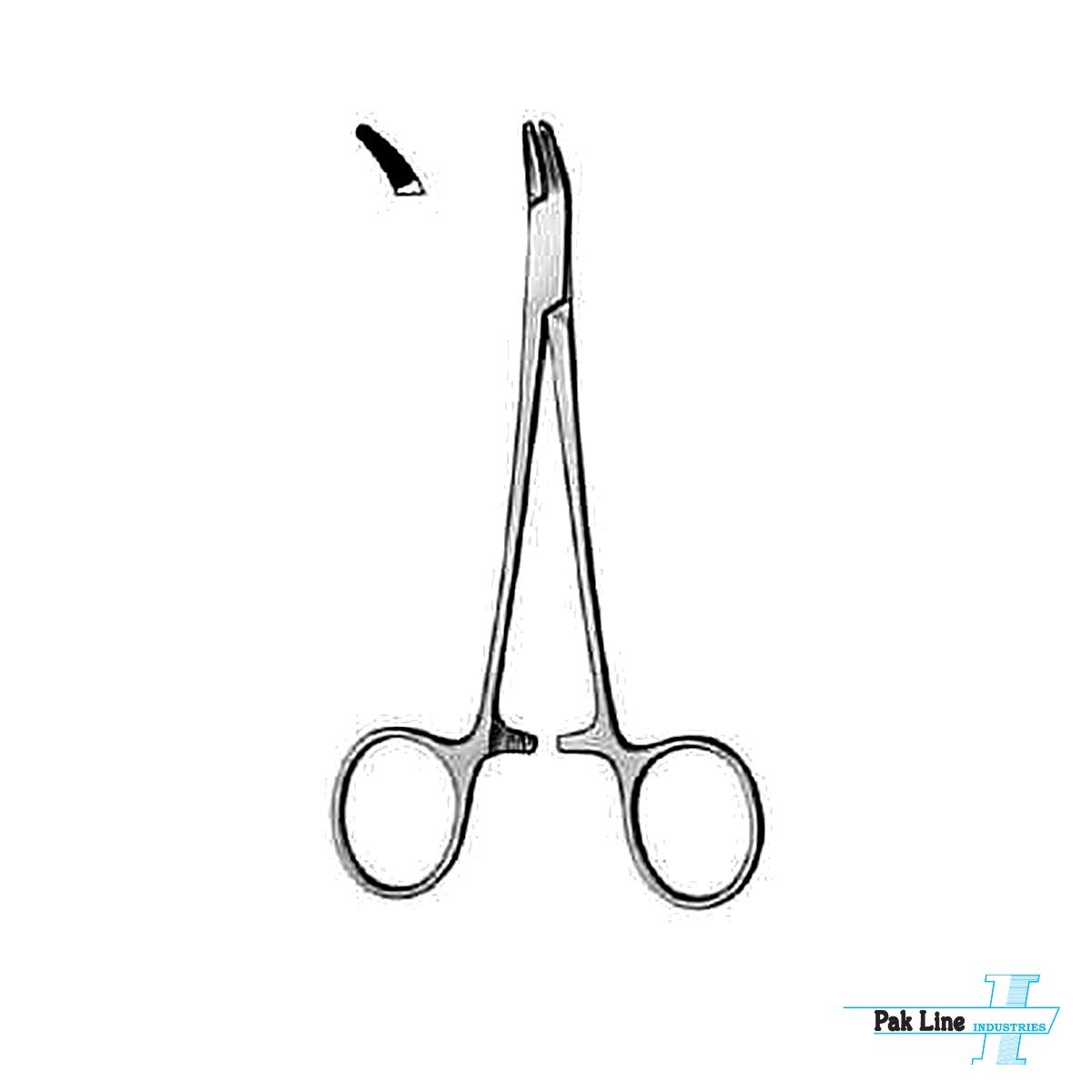
Basic orthopedic instrument set
A basic orthopaedic or small-fragment hand-instrument set usually contains:
- Single- and double-action bone rongeurs
- Bone cutting forceps
- Osteotomes, chisels and gouges in 3-4 widths, with a mallet
- Volkmann curettes in 2-3 sizes
- Periosteal elevators and bone levers
- Bone holding and reduction forceps
- Wire twisting forceps and wire cutters
- Bone file and retractors
We build these as custom orthopaedic kits to your list. See also our surgical instrument sets list.
What to check when buying orthopedic instruments
- Hardness and edges: cutting instruments must be hardened to hold an edge on cortical bone.
- Joint strength: rongeurs and cutters take heavy loads; joints and springs should be tight and smooth.
- Balance: osteotomes and mallets should feel balanced in the hand.
- Finish: satin, passivated stainless steel resists corrosion through repeated autoclaving.
Use our 12-point quality checklist on any sample.
Orthopedic instruments from Pak Line Industries
Pak Line Industries manufactures orthopedic and bone surgery instruments in Sialkot, Pakistan for hospitals, trauma centres and distributors in Europe, the United States, the Middle East and Asia. Browse our orthopedic instruments, see the bone surgery range, download the orthopedic catalogue or request samples.
FAQs
What instruments are used in orthopedic surgery?
Bone rongeurs, bone cutters, osteotomes, chisels, gouges, mallets, saws, curettes, bone files, periosteal elevators, bone levers, bone holding forceps and wire instruments.
What is the difference between an osteotome and a chisel?
An osteotome is bevelled on both sides and cuts in a straight line; a chisel has one bevel and is used to remove bone.
What is a bone rongeur used for?
To bite away small pieces of bone and smooth bone edges, for example in spine, hand and amputation surgery.
What is a periosteal elevator?
An instrument that strips the periosteum (the membrane covering bone) so the bone surface can be exposed.
Are orthopedic hand instruments reusable?
Yes. Stainless steel orthopedic instruments are reusable and can be steam sterilised after cleaning.
Source orthopedic instruments direct from Sialkot
Pak Line Industries has manufactured surgical, dental and beauty instruments in Sialkot, Pakistan since 1985. ISO 13485 & CE quality, OEM and private label, exported to 55 countries.
