

Every neurosurgeon, ENT surgeon and plastic surgeon knows the moment: the bipolar forceps coagulates a vessel, the tips open, and charred tissue sticks to the metal, tearing the vessel it was meant to seal. Tip sticking slows surgery, forces the scrub nurse to keep cleaning the tips and, over time, damages the instrument. That is why non-stick bipolar forceps have become the preferred choice in many operating rooms. This guide explains how bipolar forceps work, the main types, the materials and non-stick technologies used in the tips, and the quality and safety tests buyers should ask for before ordering.
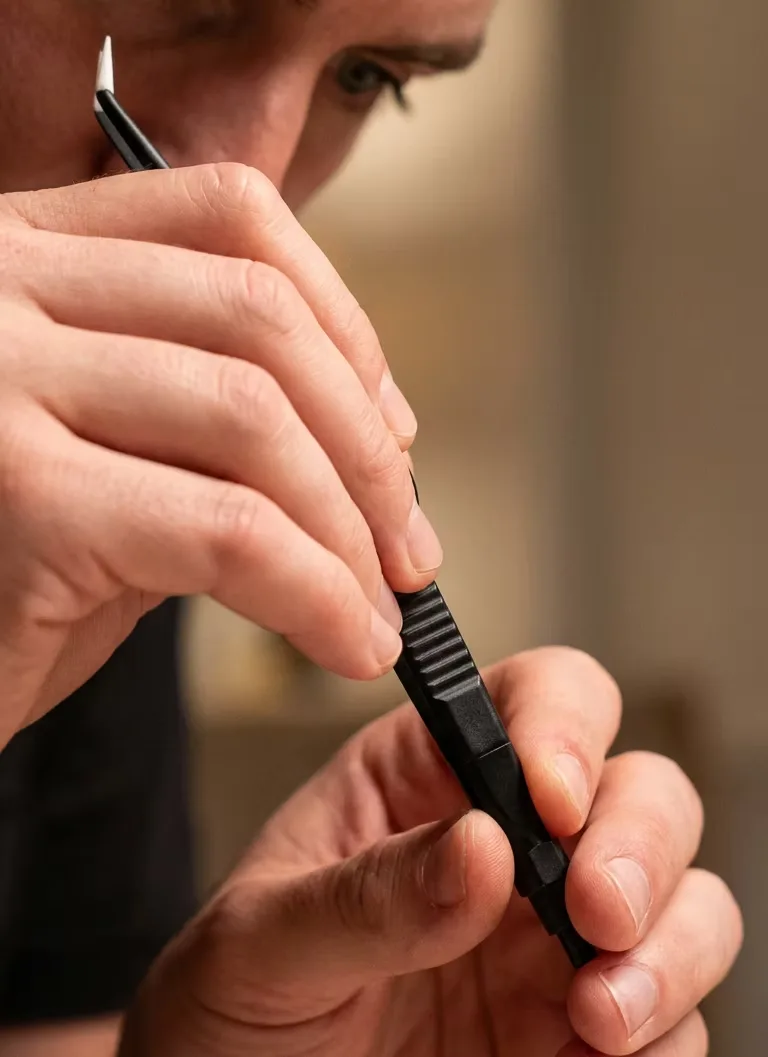
How bipolar forceps work
In bipolar electrosurgery, the two tips of the forceps act as the active and return electrodes. High-frequency current from the electrosurgical generator flows only through the tissue held between the tips. Because the current does not travel through the patient’s body to a return pad (as it does in monopolar surgery), bipolar forceps give precise, localised coagulation with very little spread to surrounding tissue. That makes them essential near nerves, the brain, the spinal cord, the eye and in microsurgery. For a general overview, read our bipolar forceps types and uses guide.
Common types of bipolar forceps
| Type | Design | Typical use |
|---|---|---|
| Straight (jeweller / Adson style) | Straight shaft, fine to broad tips | General surgery, plastic and dermatologic surgery |
| Bayonet | Offset shaft keeps the hand out of the line of sight | Neurosurgery, spine, ENT and microscope work |
| Cushing | Longer, insulated shaft with fine tips | Neurosurgical coagulation in deep fields |
| Angled and curved | Angled tips for access around structures | ENT, ophthalmic and micro-procedures |
| Irrigating | Built-in fluid channel to the tips | Keeps tissue moist and reduces sticking in neurosurgery |
| Non-stick | Special tip alloy or coating | Any procedure where repeated coagulation causes adhesion |
| Endoscopic / laparoscopic | Long shaft (around 26 to 33 cm), grasping jaws | Minimally invasive surgery |
Bipolar forceps are typically made in lengths from about 10 to 25 cm, with tip widths from very fine (about 0.25 to 0.5 mm) for microsurgery up to 1 to 2 mm for general coagulation.
Why tissue sticks to bipolar tips
During coagulation, the tissue between the tips heats up. Proteins denature and form a sticky coagulum. If the tips themselves become too hot, or the tissue dries out completely, this coagulum bonds to the metal surface. Common causes of sticking include:
- Tips that hold heat instead of conducting it away
- Too much power on the generator, or long activation times
- Tips touching each other during activation
- Rough or scratched tip surfaces that give the coagulum something to grip
- Coagulum left on the tips from previous activations
Bipolar forceps materials
The material decides how strong the forceps are, how well the tips conduct electricity and heat, and how they survive repeated sterilisation:
- Medical-grade stainless steel: the standard choice for the body and many tips. Strong, springy and corrosion resistant, but a relatively poor heat conductor, so tips can heat up and stick.
- Titanium: lighter and non-magnetic, which some neurosurgeons prefer for long microscope procedures and near imaging equipment.
- Silver alloy tips: silver conducts heat far better than stainless steel. Silver-alloy tips draw heat away from the tissue contact point, keeping the tip surface cooler and reducing adhesion.
- Coated tips: some designs use specialised conductive or non-stick surface coatings on the working ends.
- Insulation: the shaft is covered with an electrically insulating coating, often epoxy, nylon or a similar polymer, leaving only the tips exposed. Insulation quality is critical for safety.
How non-stick bipolar forceps work
Non-stick bipolar forceps reduce adhesion in two main ways. The first is heat dissipation: tips made from or plated with highly conductive silver alloys spread heat quickly through the tip, so the surface touching the tissue stays below the temperature at which coagulum bonds strongly. The second is surface finish: very smooth, polished or specially coated tips give the coagulum less to grip. Many designs combine both, with conductive tips and a mirror-polished working surface.
The practical benefits are less tissue build-up on the tips, fewer interruptions to clean them, more consistent contact between tip and tissue, and less risk of tearing a freshly coagulated vessel when the tips open. Performance does vary with the technology, the design and the generator settings used, so buyers should ask suppliers how non-stick performance has been tested rather than relying on the label alone.
Connectors and compatibility
Bipolar forceps connect to the generator through a reusable bipolar cable. The plug at the end of the forceps must match that cable. The two most common families are the US / American connector and the European connector, each with two pins whose shape and spacing differ between systems. Always confirm the exact plug type, pin spacing and cable model with your customer before ordering, because a forceps that does not fit the hospital’s cable cannot be used.
Quality and safety checks for bipolar forceps
Because bipolar forceps carry electrical current and are reprocessed many times, quality goes well beyond appearance. The US FDA’s guidance on reusable electrosurgical instruments highlights mechanical strength and electrical performance, including insulation integrity, after simulated use and reprocessing. When evaluating a supplier, ask about:
- Tip alignment: tips should meet exactly and close evenly, with no crossing, so current flows only through the tissue held between them.
- Spring action: smooth, even opening force that does not tire the surgeon’s hand during long procedures.
- Insulation integrity: high-voltage dielectric testing of the insulated shaft to detect pinholes or thin spots that could cause stray burns.
- Electrical continuity: each tip must connect reliably to its pin with low resistance.
- Tip finish and dimensions: checked under magnification against the specification.
- Durability after reprocessing: insulation and function should hold up after repeated cleaning and autoclave cycles.
- Documentation: clear cleaning and sterilisation instructions, material information and test records.
Our guide on how to check the quality of surgical instruments covers general inspection steps.
Care tips that keep bipolar tips non-stick
- Use the lowest effective power setting and short activations.
- Keep the tips slightly apart during coagulation; do not let them touch.
- Irrigate the field or use irrigating bipolar forceps where appropriate.
- Wipe tips with a damp sponge during surgery. Never scrape them with a scalpel or abrasive pad, which destroys the polished or coated surface.
- Inspect insulation before every use and withdraw any instrument with cracks, chips or exposed metal.
- Follow the manufacturer’s cleaning instructions; see our cleaning and sterilisation guide.
Buyer checklist
- Intended application and specialty
- Type (straight, bayonet, Cushing, irrigating, endoscopic) and length
- Tip width, shape and angle
- Tip material and non-stick technology, with test evidence
- Insulation material and testing procedure
- Connector type (US or European) and cable compatibility
- Reprocessing instructions
- OEM marking, packaging and documentation for private label
Bipolar and electrosurgical instruments from Pak Line
Pak Line Industries’ family manufacturing journey in Sialkot, Pakistan began in 1965, and the company was established in 1985. We manufacture reusable bipolar forceps and electrosurgical instruments for distributors and private-label brands in more than 55 countries, including straight and bayonet bipolar forceps, endoscopic bipolar forceps and bipolar artery sealers. Browse our electrosurgical instruments, download our catalogues, or request samples.
Source bipolar forceps direct from the manufacturer
Pak Line Industries has manufactured surgical, dental and beauty instruments in Sialkot, Pakistan since 1985. ISO 13485 & CE quality, OEM and private label, exported to 55 countries.
FAQs
What are non-stick bipolar forceps?
Non-stick bipolar forceps are bipolar forceps with tips designed to reduce tissue adhesion during coagulation, usually through highly conductive silver-alloy tips that dissipate heat and very smooth or coated tip surfaces.
Why does tissue stick to bipolar forceps?
Tissue sticks when the tips get too hot and the coagulated protein bonds to the metal. High power, long activation, touching tips and rough tip surfaces all make sticking worse.
What is the difference between bipolar and monopolar forceps?
In bipolar forceps current flows only between the two tips through the tissue held between them. In monopolar surgery current passes from one electrode through the patient to a return pad.
What are bipolar forceps made of?
Bipolar forceps are usually made of medical-grade stainless steel or titanium, with an insulated shaft and tips that may be stainless steel, silver alloy or specially coated.
What is a bayonet bipolar forceps used for?
A bayonet bipolar forceps has an offset shaft that keeps the surgeon’s hand out of the line of sight, so it is widely used in neurosurgery, spine and ENT procedures under a microscope.
Are bipolar forceps connectors universal?
No. US and European bipolar connectors differ in pin shape and spacing, so the forceps plug must match the bipolar cable and generator used by the hospital.
