
Many of the surgical and dental instrument brands sold in Europe, North America and the Middle East do not run their own factories. Instead, they partner with a specialist manufacturer that produces instruments to their specification and brands them as their own. This is known as OEM or private label manufacturing. Done well, it lets distributors build a profitable brand without the cost of a factory. Done badly, it leads to inconsistent quality and unhappy customers. Here is how to choose the right partner.
OEM vs private label: what is the difference?
- Private label: you choose existing catalogue patterns from the manufacturer, which are laser-marked with your brand and packed in your packaging.
- OEM / custom manufacturing: the manufacturer produces instruments to your own drawings, samples or specifications, sometimes developing completely new designs.
Most brands use a mix: private label for standard patterns and OEM for signature products.
Step 1: Define your range and target market
Decide which categories you want to sell, such as general surgery, dental, orthodontic or beauty instruments, and which markets you will serve. Regulatory requirements such as CE marking or registration differ by country and affect which supplier you choose.
Step 2: Verify the supplier is a real manufacturer
Ask for a factory video tour, photos of machinery, and details of in-house processes such as forging, heat treatment and polishing. Manufacturers with an integrated facility control quality and lead times far better than traders.
Step 3: Check certifications and documentation
- ISO 13485:2016 medical device quality management
- CE marking support and technical documentation
- Material certificates and hardness test reports
- Export registration and experience shipping to your country
You can review Pak Line’s documents on our certifications page.
Step 4: Test samples properly
Order pre-production samples and test them in real conditions: cutting performance, joint smoothness, ratchet engagement, finish and corrosion resistance after several autoclave cycles. Approve a “golden sample” that all future batches must match.
Step 5: Agree branding and packaging
- Laser marking: brand name, pattern code, CE mark and country of origin.
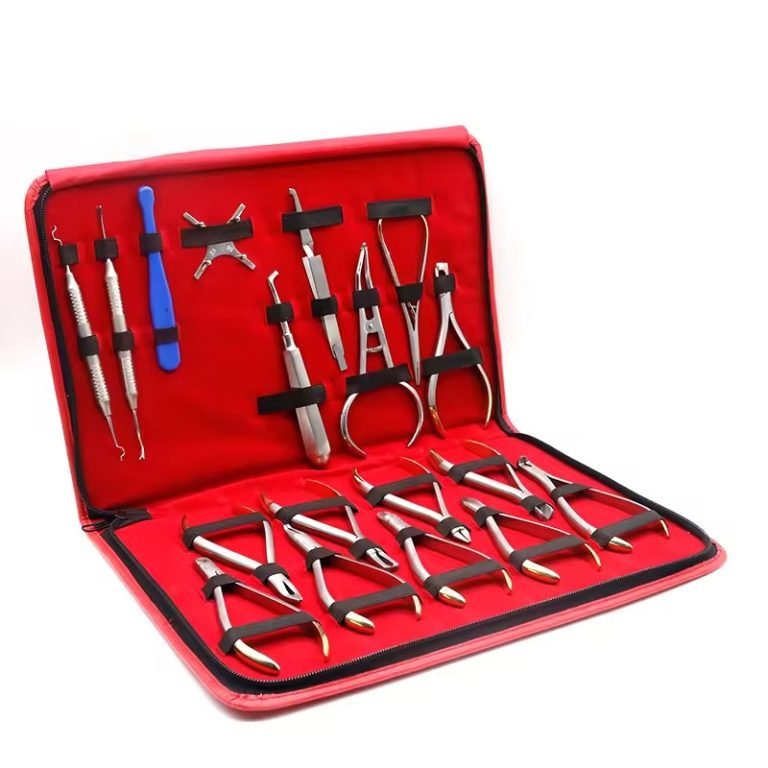
- Packaging: individual pouches, boxes, kits, cassettes or display cases.
- Labelling: barcodes, lot numbers and instructions for use.
Step 6: Understand MOQ, cost and lead time
Private label orders on catalogue items usually have low MOQs. Fully custom OEM designs need higher quantities to cover dies and tooling. Ask for clear price breaks, sample costs, payment terms and realistic lead times, typically 4 to 8 weeks for branded production.
Red flags to watch for
- Prices far below the market, which often mean lower-grade steel or skipped heat treatment.
- No willingness to share certificates or show the factory.
- Bulk orders that do not match approved samples.
- Poor communication or no single point of contact.
Why partner with Pak Line Industries
Since 1985, Pak Line Industries has manufactured instruments in Sialkot for brands and distributors in 55 countries. We offer private label and OEM production, in-house design and development, laser marking and custom packaging, with materials including German and French stainless steel and titanium. Learn more about becoming a Pak Line distributor.
FAQs
Can I put my own logo on surgical instruments?
Yes. Your logo and brand name can be laser-marked on each instrument and printed on packaging.
Is a private label instrument brand legal?
Yes, provided the manufacturer and brand meet the regulatory requirements of the target market, such as CE marking in Europe.
Source instruments direct from the manufacturer
Pak Line Industries has manufactured surgical, dental and beauty instruments in Sialkot, Pakistan since 1985. ISO 13485 & CE quality, OEM and private label, exported to 55 countries.
