


Two instruments can look identical in a catalogue but perform very differently after six months in a hospital. In most cases the difference comes down to the stainless steel grade and how it was heat treated. If you buy or sell instruments, understanding surgical stainless steel grades helps you compare quotes properly and avoid cheap instruments that rust or lose their edge.
Why surgical instruments use martensitic stainless steel
Most reusable instruments are made from martensitic stainless steels in the AISI 400 series. These grades contain enough chromium (around 12 to 18 percent) to resist corrosion and enough carbon to be hardened by heat treatment. That combination of hardness, toughness and corrosion resistance is what cutting and grasping instruments need. International standard ISO 7153-1 lists the steels suitable for surgical instruments.
The main grades compared
AISI 410
Lower carbon, good toughness and corrosion resistance, moderate hardness. Used for non-cutting instruments such as retractors, specula and some forceps.
AISI 420 (420A / 420B)
The workhorse of the industry. Higher carbon allows hardening to roughly 50 to 54 HRC, giving a good balance of strength and edge retention. Widely used for forceps, haemostats, needle holders and many scissors.
AISI 440A / 440C
The highest carbon content of the common grades, so it can be hardened further (up to around 56 to 58 HRC for 440C). Ideal for scissors, chisels, bone cutters and anything that must hold a sharp edge, but slightly less tough, so design and heat treatment matter.
AISI 304 and 316
Austenitic steels that cannot be hardened by heat treatment but offer excellent corrosion resistance. Used for trays, bowls, cannulas, suction tubes and some retractors rather than cutting instruments.
What does “German stainless steel” mean?
“German steel” usually means stainless steel produced to German DIN specifications, for example 1.4021 (similar to 420) or 1.4034 (a higher-carbon 420/440A type), often supplied by European mills. It is known for consistent chemistry and cleanliness. Instruments described as German steel can be made anywhere, including Sialkot, as long as the raw material meets that specification. Always ask for the material certificate rather than relying on the label alone.
Heat treatment matters as much as the grade
Even the best steel performs poorly if heat treatment is wrong. Correct hardening, quenching and tempering give the right hardness for each instrument type: very hard for cutting edges, slightly softer and tougher for springs and ratchets. After finishing, instruments are passivated to strengthen the chromium oxide layer that resists corrosion. Learn more in our manufacturing process guide.
Titanium and tungsten carbide options
- Titanium: lightweight, non-magnetic and highly corrosion resistant, popular for micro and ophthalmic instruments.
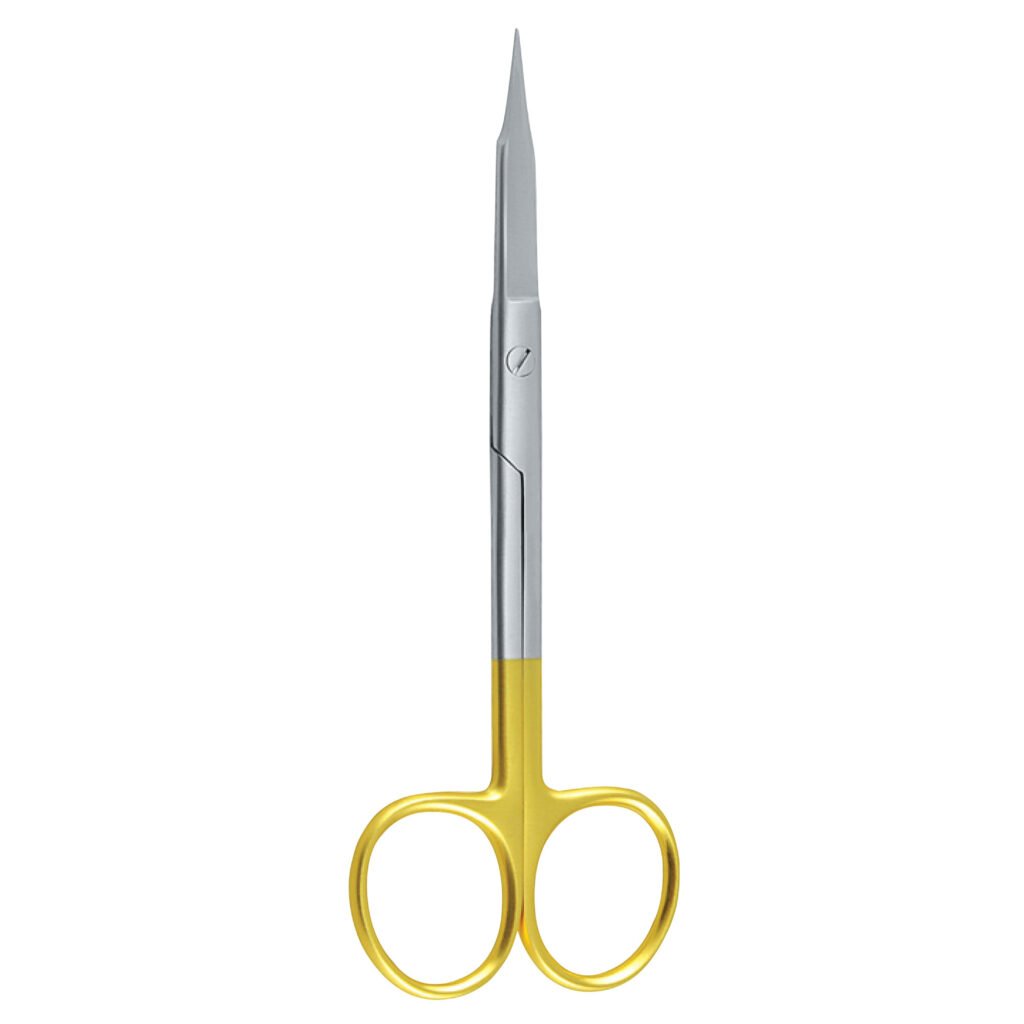
- Tungsten carbide inserts: very hard inserts brazed onto scissor blades and needle holder jaws for longer life. See our guide on tungsten carbide vs stainless steel instruments.
How to choose the right steel
- Cutting instruments: 420 high-carbon or 440 grade, fully hardened.
- Grasping and clamping instruments: 420 grade.
- Retractors and non-cutting instruments: 410 or 420.
- Hollowware and tubes: 304 or 316.
At Pak Line Industries we use surgical-grade steel to ISO 7153-1 and, on request, German or French stainless steel or titanium. Every batch is hardness tested and passivated before dispatch. Ask us for material specifications for any instrument.
FAQs
What is the best steel for surgical instruments?
There is no single best grade. 420 is ideal for most forceps and needle holders, while 440 grades suit scissors and sharp cutting instruments.
Do surgical steel instruments rust?
Good quality, properly passivated instruments resist corrosion, but they can stain or pit if exposed to blood, saline or harsh chemicals for long periods. Correct cleaning prevents this.
Source instruments direct from the manufacturer
Pak Line Industries has manufactured surgical, dental and beauty instruments in Sialkot, Pakistan since 1985. ISO 13485 & CE quality, OEM and private label, exported to 55 countries.
