

Dental clinics replace extraction forceps, elevators and probes more often than almost any other hand instrument, which makes them a core product line for dental distributors, importers and private-label brands. Yet the range is large: dozens of forceps patterns, several numbering systems and many specialty tools. This guide explains the main dental extraction instruments and specialty dental instruments, how forceps numbers work, and what B2B buyers should check before choosing a dental instruments manufacturer.
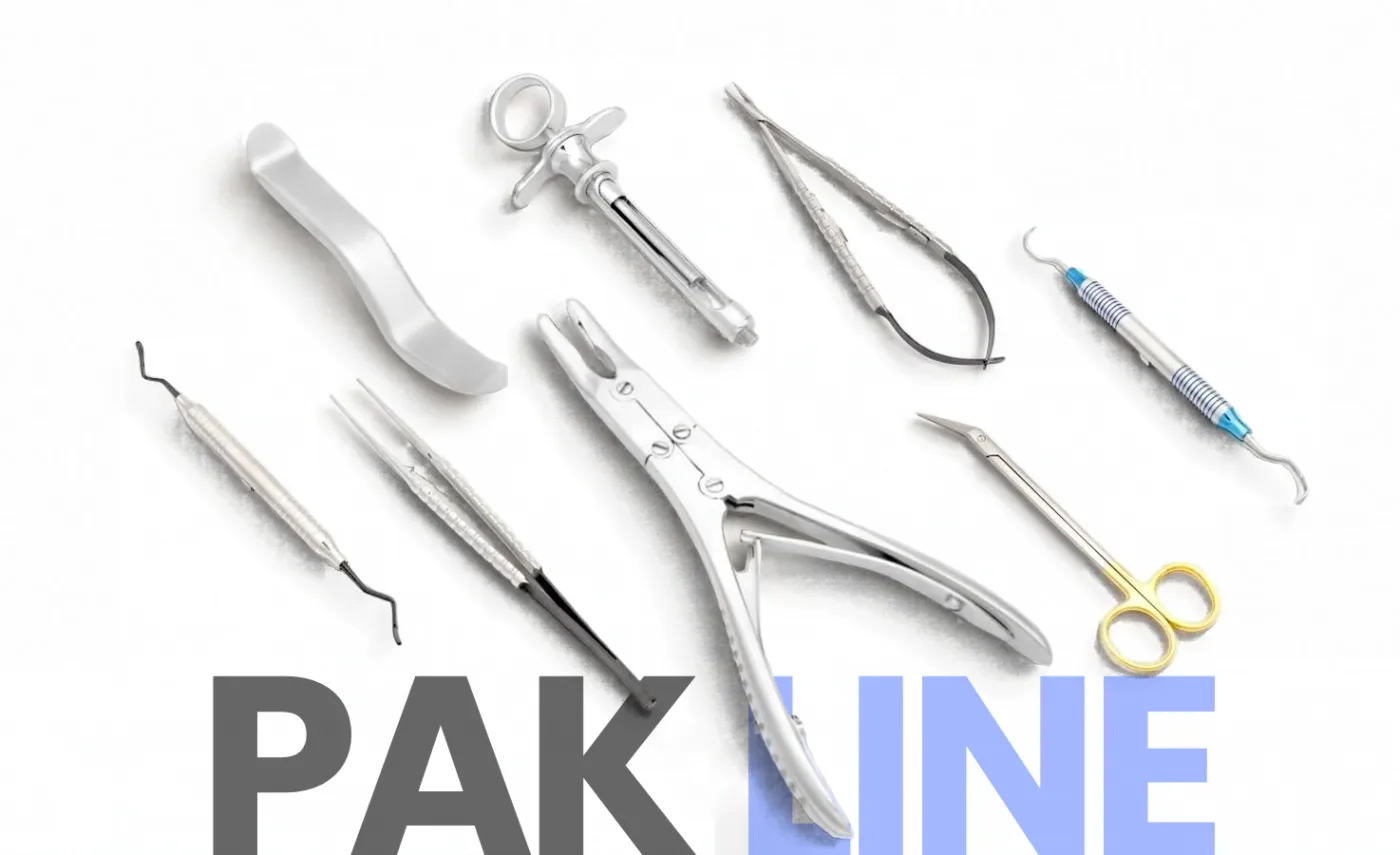
1. Dental extraction forceps
Extraction forceps grasp the crown or root of a tooth and luxate it from the socket. Each pattern is shaped for a specific tooth group and arch, so a clinic needs a full set rather than a single “universal” forceps. The main design differences are:
- Upper vs lower: upper (maxillary) forceps usually have straight or bayonet handles in line with the beaks; lower (mandibular) forceps have beaks at roughly a right angle to the handles.
- Beak shape: narrow beaks for incisors and roots, wider beaks for premolars, and pointed or “cowhorn” beaks that engage the furcation of molars.
- Left and right: upper molar forceps come in left and right versions because the pointed beak must sit in the buccal furcation.
American vs English pattern forceps
There are two main families. American pattern forceps (numbered, e.g. #150, #151) have handles that run alongside the beaks and are used from in front of the patient. English pattern forceps (also numbered, e.g. 74, 76, 79) have a vertical hinge and are popular in the UK, Europe, the Middle East and South Asia. Distributors usually stock the pattern their market is trained on.
Common extraction forceps by number
| Forceps | Typical use |
|---|---|
| #150 (upper universal) | Upper incisors, canines and premolars |
| #151 (lower universal) | Lower incisors, canines and premolars |
| #53 L/R, #88 L/R, #18 L/R | Upper first and second molars, left and right |
| #16 / #23 “cowhorn” | Lower molars, engaging the furcation |
| #17 | Lower molars |
| #210S | Upper third molars (wisdom teeth) |
| #69 and root forceps | Root tips and fractured roots |
| Paediatric forceps (#150S, #151S) | Primary teeth in children |
Numbering can vary slightly between manufacturers, so buyers should always share drawings or reference samples when ordering. Browse our tooth extracting forceps, English pattern forceps and wisdom teeth forceps.
2. Dental elevators and luxators
Elevators loosen the tooth by expanding the socket and tearing the periodontal ligament before forceps are applied. Common types include straight elevators such as the Coupland and Bein, Cryer elevators (triangular, left and right) for roots, Warwick James elevators for small roots, Winter elevators and fine luxators with very thin blades for atraumatic extraction. Periosteal elevators such as the Molt #9 lift the gum and periosteum. See our root elevators and periosteal elevators.
3. Oral surgery instruments
An oral surgery or extraction kit usually adds:
- Scalpel handle No. 3 and periosteal elevator
- Bone rongeurs for trimming sharp bone edges
- Bone files and surgical curettes (Lucas) for socket debridement
- Cheek and tongue retractors (Minnesota, Weider)
- Needle holder, tissue forceps and suture scissors
- Mouth gag and bite block for longer procedures
Explore dental bone rongeurs and cheek retractors, or our dental implant surgical kit list.
4. Periodontal probes and diagnostic instruments
Periodontal probes measure pocket depth in millimetres to assess gum health. Common patterns include the Williams probe (1-2-3-5-7-8-9-10 mm markings), the UNC 15 (markings every millimetre to 15 mm) and the WHO / CPITN probe with a 0.5 mm ball tip. For buyers, the most important points are legible, accurate, permanent markings and a consistent tip diameter. Probes are usually sold alongside explorers and mouth mirrors; see explorers and probes and periodontal instruments.
5. Orthodontic pliers
Orthodontic pliers bend, form and cut wires and place bands and brackets. Popular patterns include the Weingart utility plier, bird beak and three-prong pliers for wire bending, Howe pliers, band removers, and distal end and pin and ligature cutters, often with tungsten carbide cutting edges. Key quality points are jaw alignment, smooth joint action and cutters rated for the wire size. See our orthodontic instruments.
What makes a quality dental extraction instrument?
- Beak fit: forceps beaks must close parallel and meet the tooth over a wide area, not just at the tips.
- Serrations: fine, even beak serrations that grip enamel without slipping.
- Hardness and steel: correctly hardened martensitic stainless steel, so beaks and elevator blades do not bend or chip. See surgical steel grades.
- Handle design: comfortable, non-slip handles that transmit force without hurting the clinician’s hand.
- Finish and corrosion resistance: even satin finish and proper passivation to survive repeated autoclaving.
- Batch consistency: the same pattern must look and perform the same on every reorder, which matters most for distributors.
How to choose a dental instruments manufacturer
- Experience: look for a maker with a long track record in dental and surgical instruments.
- Specifications: confirm patterns, numbering and dimensions against drawings or samples.
- Quality system and documents: ask for certification scope, material certificates and inspection procedures.
- OEM and private label: check laser marking, custom patterns and packaging options.
- Samples first: test before committing to a bulk order. You can request samples here.
Dental instruments from Pak Line
Pak Line Industries’ manufacturing heritage in Sialkot, Pakistan began in 1965, and the company was established in 1985. Today we supply dental distributors, importers and private-label brands in more than 55 countries with extraction forceps (American and English pattern), elevators and luxators, periodontal probes, orthodontic pliers and complete dental instrument sets. Visit our dental instruments page or read dental instruments names and uses.
Source dental extraction instruments direct from Sialkot
Pak Line Industries has manufactured surgical, dental and beauty instruments in Sialkot, Pakistan since 1985. ISO 13485 & CE quality, OEM and private label, exported to 55 countries.
FAQs
What instruments are used for tooth extraction?
The basic extraction instruments are extraction forceps, elevators or luxators, a periosteal elevator, a curette, bone rongeurs and a bone file, plus suturing instruments.
What is the difference between upper and lower extraction forceps?
Upper forceps usually have straight or bayonet handles in line with the beaks, while lower forceps have beaks set at about a right angle to the handles for easier access to the lower arch.
What are #150 and #151 forceps used for?
The #150 is a universal upper forceps for incisors, canines and premolars, and the #151 is the matching universal lower forceps.
What is a cowhorn forceps?
A cowhorn forceps, such as the #16 or #23, has pointed beaks that engage the furcation of lower molars to lift the tooth from the socket.
What is the difference between English and American pattern forceps?
American pattern forceps have handles alongside the beaks and are used from in front of the patient. English pattern forceps have a vertical hinge and are widely used in the UK, Europe, the Middle East and South Asia.
Can Pak Line make private-label dental instruments?
Yes. Pak Line manufactures dental instruments with your brand laser-marked, to your patterns and packaging, for distributors and private-label companies.
