
European hospitals, tenders and distributors increasingly ask instrument suppliers about more than price and quality. Laws such as Germany’s Supply Chain Due Diligence Act (Lieferkettensorgfaltspflichtengesetz, LkSG) and wider EU initiatives on corporate sustainability due diligence require large companies to identify and address human rights and environmental risks in their supply chains. As a result, suppliers in Sialkot are now expected to show how they work, not just what they make.
What is the LkSG?
The LkSG came into force in Germany in 2023, initially for companies with 3,000 or more employees in Germany and from 2024 for companies with 1,000 or more. It requires these companies to run risk management for their own operations and direct suppliers, covering issues such as child labour, forced labour, occupational safety, fair wages, freedom of association and environmental harm. The law and its reporting duties have been subject to political discussion and amendment, and EU-level rules are evolving, so buyers should check the current status. However, the expectation of responsible, transparent suppliers is here to stay.
Why this matters for surgical instruments
Sialkot’s instrument industry includes thousands of small workshops and subcontractors. Over the years, international reports have raised concerns about working conditions in parts of the supply chain. Buyers therefore look for manufacturers that can show control over their production and subcontracting.
What buyers typically ask suppliers for
- Signed supplier code of conduct
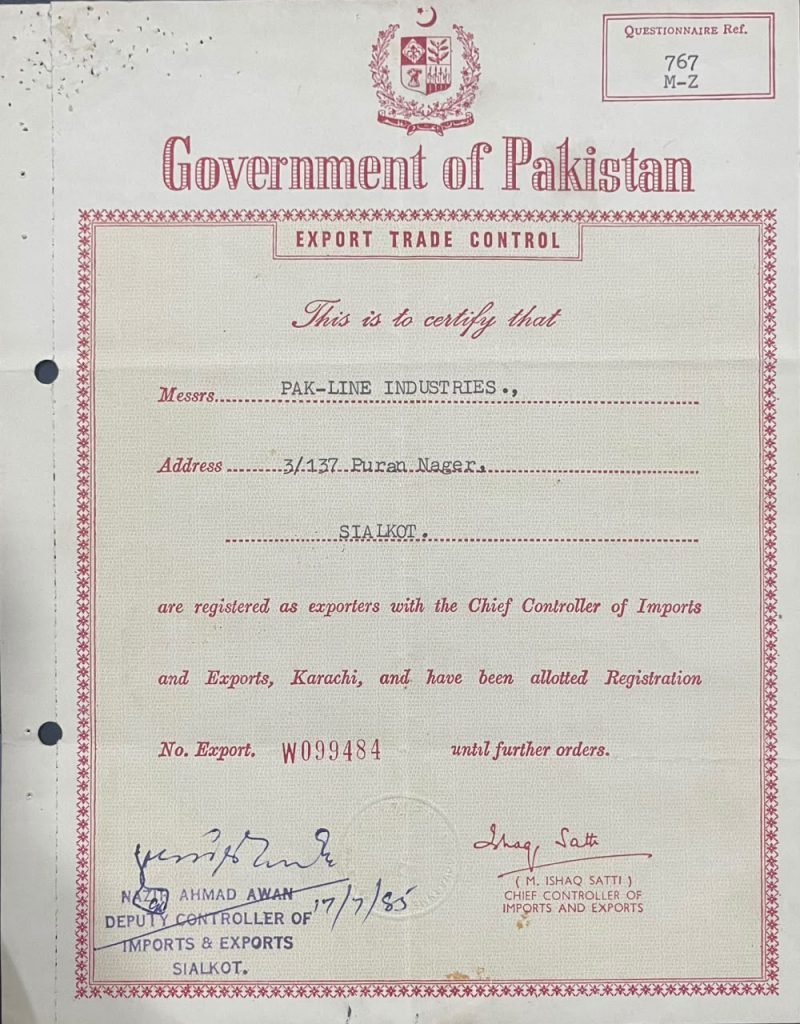
- Company registration and export licences
- Information on production sites and any subcontractors
- Policies on child labour, forced labour, working hours and wages
- Occupational health and safety measures, for example grinding dust extraction and protective equipment
- Environmental handling of chemicals, polishing waste and wastewater
- Grievance mechanisms for workers
- Willingness to allow audits or answer self-assessment questionnaires
How an integrated manufacturer helps
Manufacturers who keep forging, machining, heat treatment, finishing and inspection largely in-house can trace each instrument and answer due diligence questions with confidence. This also supports quality requirements under ISO 13485 and the EU MDR.
Pak Line Industries’ approach
Pak Line Industries is a second-generation family business with an integrated facility in Sialkot and more than 200 staff. We welcome buyer questionnaires and factory visits and can provide our registrations, certifications and production information to support your due diligence. See our production process and certifications, or contact us.
FAQs
Does the LkSG apply directly to Pakistani suppliers?
No. The law applies to large companies in Germany, but they pass due diligence expectations on to their suppliers through contracts, questionnaires and audits.
What documents should a supplier prepare?
A code of conduct, company registrations, certifications, information about production sites and subcontractors, and policies on labour, safety and the environment.
This article is general information for buyers and is not legal or regulatory advice. Always confirm current requirements with the relevant authority or a regulatory consultant.
Source instruments direct from the manufacturer
Pak Line Industries has manufactured surgical, dental and beauty instruments in Sialkot, Pakistan since 1985. ISO 13485 & CE quality, OEM and private label, exported to 55 countries.
