


Reusable surgical instruments can last for many years, but only if they are cleaned and sterilised correctly every time. Poor reprocessing leads to stains, corrosion, stiff joints and, most importantly, a risk to patient safety. This guide walks through each step of how to clean and sterilize surgical instruments. Always follow your facility’s protocols and the manufacturer’s instructions for use.
Step 1: Point-of-use care
Start immediately after the procedure. Wipe visible blood and tissue from instruments with a sterile sponge moistened with water. Do not let blood dry on instruments, as dried soil is much harder to remove and can cause pitting. Keep instruments moist using a pre-cleaning spray or damp towel if they cannot be cleaned right away.
Step 2: Safe transport
Separate sharp and delicate instruments, open hinged instruments and transport them in closed, labelled containers to the decontamination area.
Step 3: Cleaning
- Manual cleaning: use a neutral-pH enzymatic detergent and soft nylon brushes. Never use steel wool or wire brushes. Clean under the water surface to avoid aerosols.
- Ultrasonic cleaning: removes soil from joints, serrations and box locks. Place instruments open in the basket and avoid mixing different metals.
- Automated washer-disinfector: provides validated, consistent cleaning and thermal disinfection.
Pay special attention to box locks, serrations, ratchets and cannulated instruments, which should be flushed thoroughly.
Step 4: Rinsing and drying
Rinse with clean, ideally demineralised or distilled water to prevent mineral spots. Dry instruments completely, as moisture left in joints causes staining and corrosion.
Step 5: Inspection and function testing
- Check under magnification for remaining soil, stains or corrosion.
- Test scissors for smooth, sharp cutting along the full blade.
- Check that ratchets lock and release correctly and that jaws align.
- Check tungsten carbide inserts for chips or cracks.
- Remove damaged instruments from service for repair or replacement.
Step 6: Lubrication
Apply a water-soluble, steam-permeable instrument lubricant (“instrument milk”) to hinges, joints and ratchets. Do not use oil-based lubricants, which block steam penetration.
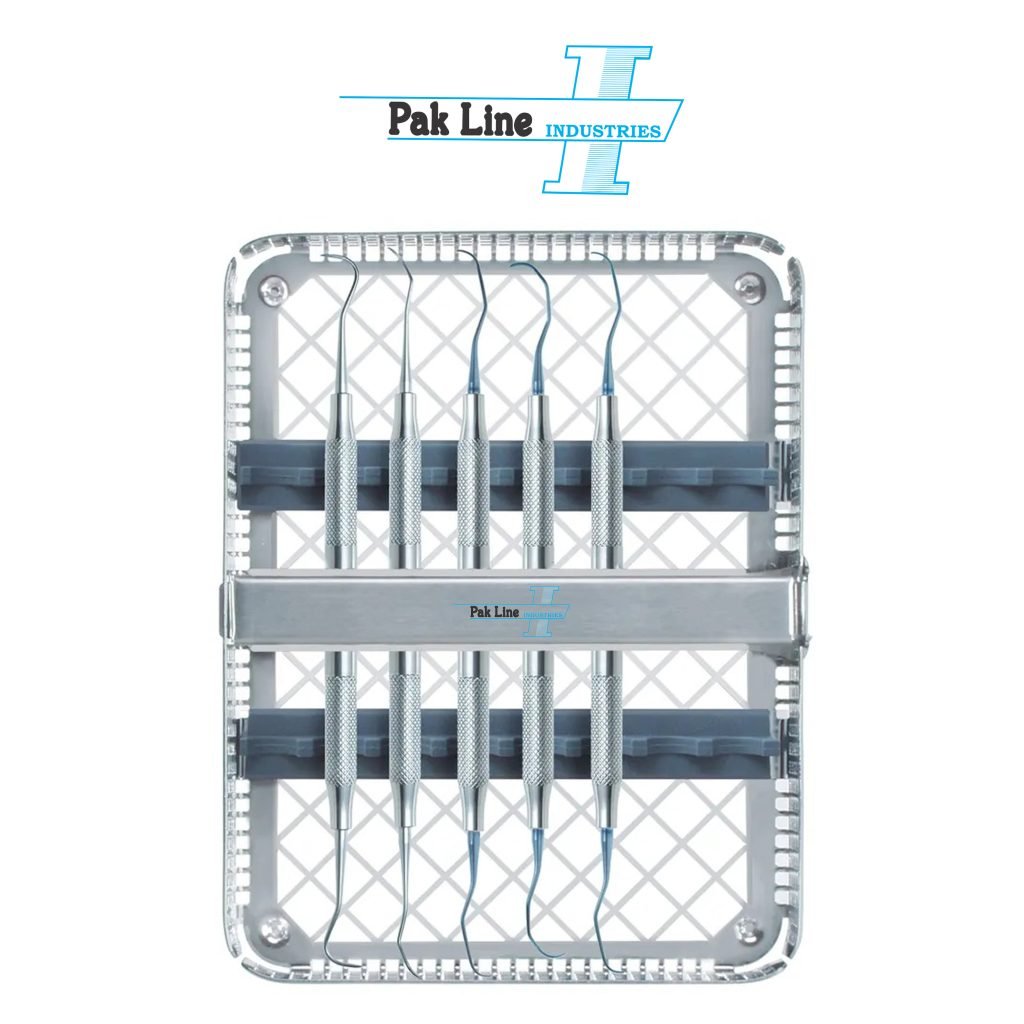
Step 7: Packaging
Pack instruments in sterilisation pouches, wraps or rigid containers and cassettes. Keep hinged instruments open or unlocked, protect sharp tips with tip guards, and include chemical indicators.
Step 8: Sterilization
Steam sterilization (autoclaving) is the standard method for stainless steel instruments. Common cycles are 134°C for at least 3 minutes or 121°C for at least 15 minutes, depending on the steriliser, load and local guidelines. Allow a full drying phase before removing packs.
Step 9: Storage
Store sterile packs in a clean, dry, enclosed area away from moisture and temperature extremes. Use first-in, first-out rotation and check packs for damage before use.
Common causes of stains and corrosion
- Dried blood or saline left on instruments
- Chlorine or bleach-based disinfectants
- Hard water and mineral deposits
- Mixing damaged or chrome-plated instruments with stainless steel in the same cycle
- Wet packs after sterilization
For a complete overview, read the Pak Line surgical instrument care and maintenance guide. Quality starts with manufacture: all Pak Line instruments are properly hardened and passivated for corrosion resistance. Explore our surgical instruments and dental instruments.
FAQs
Can I use bleach to clean surgical instruments?
No. Chlorine and bleach cause pitting and corrosion on stainless steel. Use neutral-pH or enzymatic detergents.
Why are my instruments getting brown stains?
Brown or orange stains usually come from dried blood, mineral deposits or residues from detergents and are often removable with an instrument stain remover. Persistent pitting indicates corrosion.
Source instruments direct from the manufacturer
Pak Line Industries has manufactured surgical, dental and beauty instruments in Sialkot, Pakistan since 1985. ISO 13485 & CE quality, OEM and private label, exported to 55 countries.
